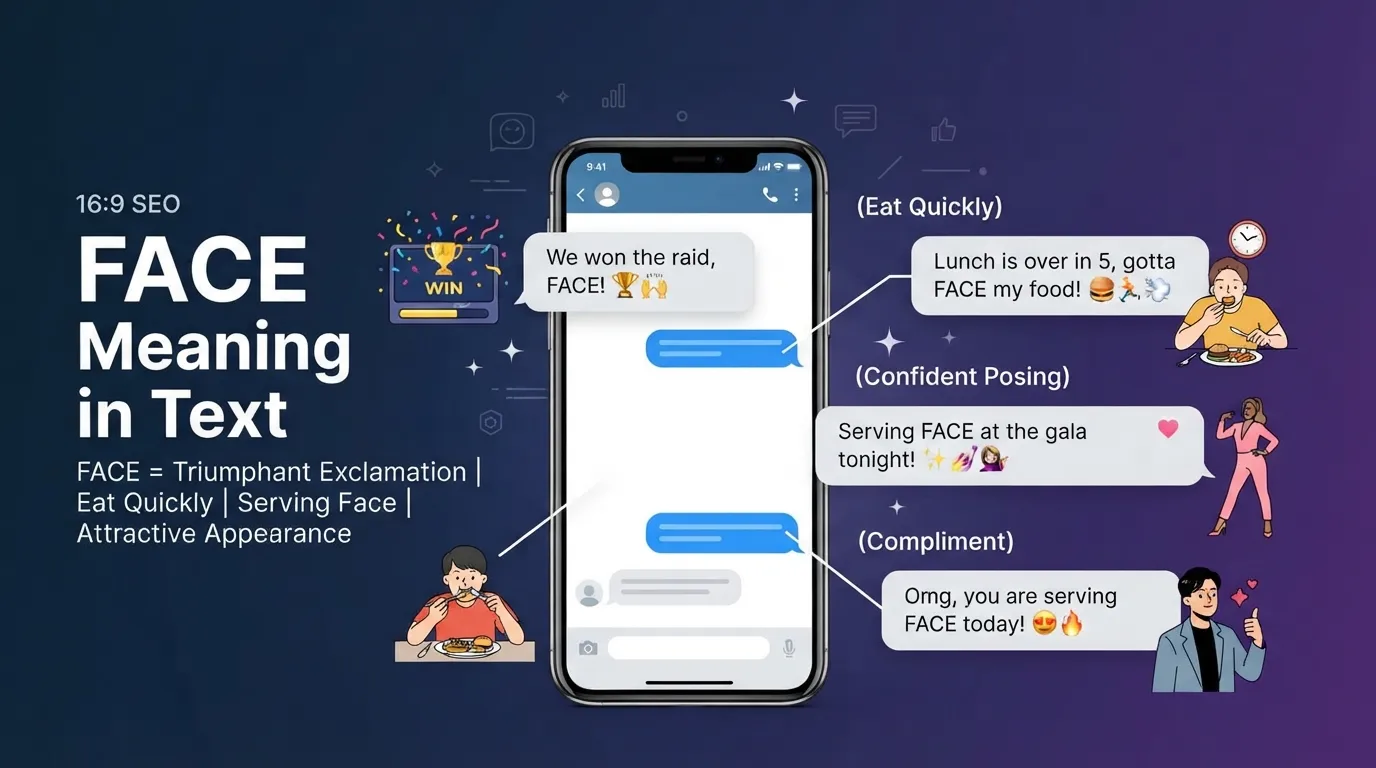
Have you ever seen someone text just “FACE!” or say “she’s got a face” and wondered exactly what they meant? You’re not alone. This everyday word carries several playful slang meanings beyond its literal definition, especially in texting, social media, and pop culture references.
Face shows up in casual banter, comebacks, and even confidence-boosting compliments. Sometimes it’s a triumphant exclamation after winning an argument or a game. Other times, it describes someone’s striking appearance or a bold, confident presence.
Understanding these slang uses of face helps you follow casual conversations, social media captions, and pop culture references more easily, especially since the word can shift meaning dramatically depending on tone and context. This guide breaks down the most common slang meanings of face, where they came from, and how to use them naturally.
Face in Text Meaning: Definition & Real-Life Examples

While face obviously refers to the front part of someone’s head, it carries several distinct slang meanings in casual texting and pop culture.
1. “Face!” a triumphant exclamation after a comeback or win
This usage works as a shortened version of “in your face!”, said after beating someone or delivering a clever comeback.
Example:
Liam: I bet you can’t beat my high score.
Zoe: beats it FACE!
2. “To face” something eating or drinking quickly and eagerly
This slang verb describes devouring food or a drink fast, often with enthusiasm.
Example:
Sam: He faced that whole pizza in like ten minutes.
Ali: No shame in that game.
3. “Serving face” or “giving face” showing confidence through expression and style
Popularized by drag culture and later mainstream media, this phrase describes delivering a bold, confident look, often with great makeup or styling.
Example:
Maya: She was absolutely serving face in that outfit last night.
Jay: Agreed, she looked incredible.
4. Describing someone as having “a face” meaning notably attractive or striking features
Friend: He’s got such a face, no wonder everyone’s obsessed.
Because these meanings differ so much, the surrounding context, gaming banter, a compliment, or a fashion comment, usually makes the intended meaning clear.
The History Behind Face in Text Meaning
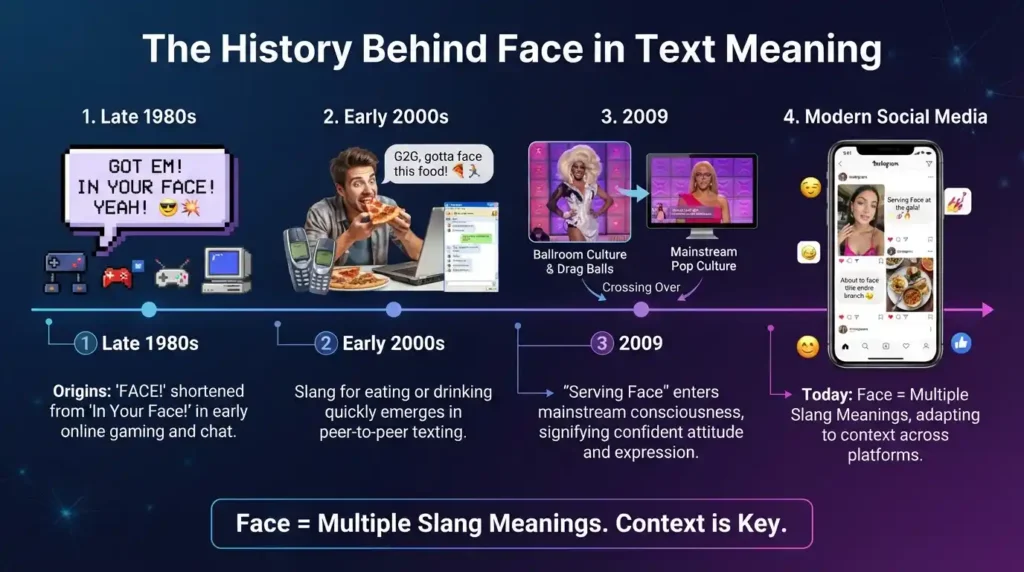
The exclamation “Face!” traces back to the late 1980s, used as a shortened, punchy version of the taunt “in your face!”, typically shouted after winning a game or delivering a sharp comeback. This usage stuck around in casual slang for decades, later carrying naturally into texting and gaming chats.
The slang verb meaning “to eat or drink quickly” developed in the early 2000s, adding a playful, energetic twist to describing someone enthusiastically finishing food or a drink.
The “serving face” or “giving face” phrase has deeper cultural roots, originating in LGBTQ+ ballroom and drag culture, especially within Black and Latino communities, as documented in the influential 1990 documentary Paris Is Burning. In this context, “face” referred to presenting a polished, confident look during a performance, judged specifically on beauty and composure.
This phrase reached mainstream audiences largely through the reality competition show RuPaul’s Drag Race, which first aired in 2009 and introduced many drag ballroom terms, including “face,” to a much wider audience. Over time, “serving face” became common in general pop culture and social media, used to compliment anyone’s confident, polished appearance.
Today, these slang meanings of face remain common across:
- Gaming and casual banter, especially the “Face!” exclamation
- Social media captions, especially “serving face”
- Everyday compliments, describing someone’s striking looks
Face in Text Meaning Across Different Platforms
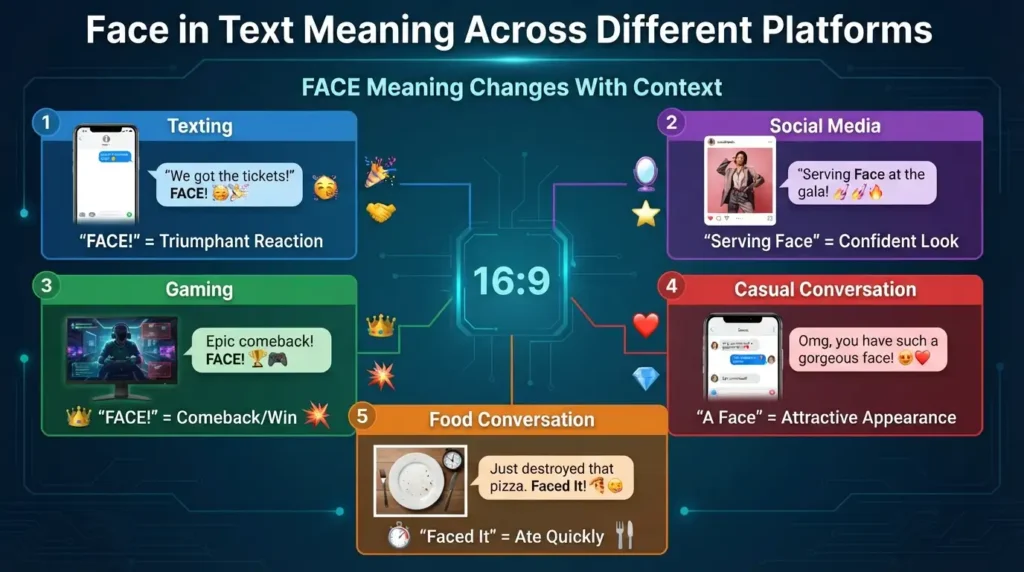
Texting (triumphant exclamation):
Dan: Told you I’d win this round.
Ella: Ugh, FACE indeed.
Social Media (serving face):
Caption: Serving face at brunch today
Gaming (comeback exclamation):
Player1: Just clutched that round.
Player2: FACE! Let’s go!
Casual Conversations (attractive appearance):
Noah: That new actor really has a face.
Ryan: Right? Impossible to look away.
Casual Conversations (eating quickly):
Coworker1: Did you eat already?
Coworker2: Yeah, faced my lunch in five minutes, starving today.
Each context shapes which slang meaning of “face” applies, though tone and the surrounding sentence almost always make it clear.
Common Misconceptions & Clarifications
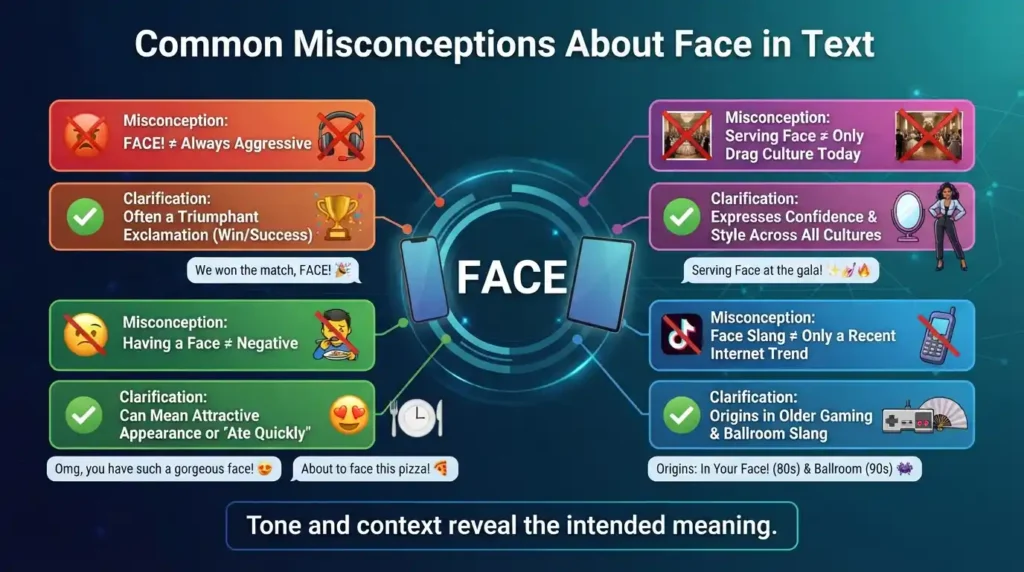
Misconception 1: “Face!” is always aggressive or mean.
Not necessarily. It’s usually playful, especially between friends during games or friendly banter.
Misconception 2: “Serving face” is only used in drag culture today.
While it originated there, it’s now widely used in general pop culture and social media to describe anyone’s confident look.
Misconception 3: Describing someone as having “a face” is negative.
It’s actually a compliment, referring to someone’s striking or attractive appearance.
Misconception 4: These slang meanings are recent internet trends.
Some, like “Face!”, have been around since the late 1980s, showing how slang can stick around for decades.
Clarification: Because “face” carries several playful meanings, tone usually signals whether it’s competitive teasing, a stylish compliment, or casual banter about food.
Similar Terms & Alternatives
| Term | Meaning | Common Use |
| Face! | Triumphant exclamation after a win or comeback | Gaming, casual banter |
| Serving/giving face | Showing confidence through style and expression | Social media, compliments |
| Slay | Doing something impressively well | Social media compliments |
| Devoured/demolished | Eating something quickly | Casual conversations |
| Owned/schooled | Similar competitive triumph | Gaming, banter |
Example:
Alex: You got schooled in that match.
Jordan: FACE! Never letting this go.
These terms often overlap in tone, especially in playful, competitive, or complimentary conversations.
How to Respond to This Term
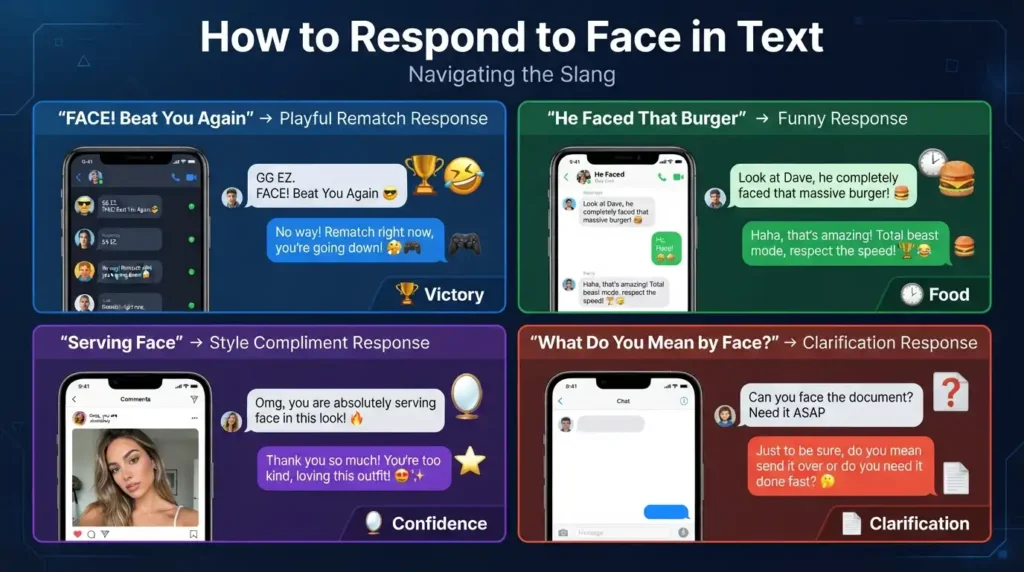
Casual (triumphant exclamation):
Friend: FACE! Beat you again.
You: Alright, alright, rematch tomorrow.
Funny:
Friend: He faced that whole burger in two minutes.
You: Absolute legend, no notes.
Professional:
These slang meanings rarely fit workplace communication, but casually among relaxed coworkers:
Coworker: She was really serving face at the company event.
You: Ha, she definitely dressed to impress.
Privacy-Conscious:
If you’re unsure how someone means “face” in a message:
You: Haha wait, what do you mean by that?
Matching tone keeps these playful expressions natural, whether it’s competitive teasing or a stylish compliment.
Regional or Cultural Differences
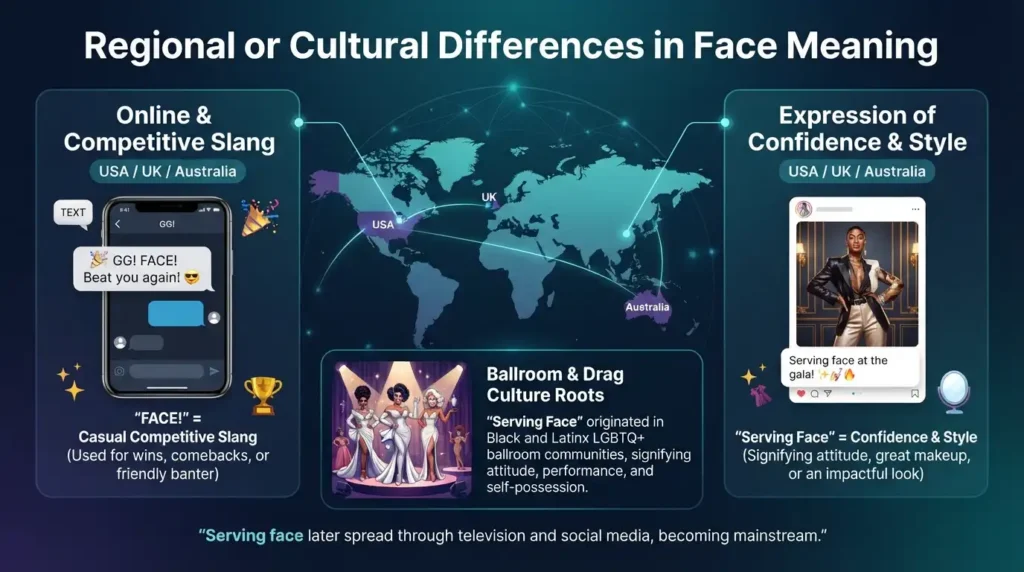
The “Face!” exclamation is widely recognized across major English-speaking regions, including the USA, UK, and Australia, since it’s been part of casual slang for decades.
The “serving face” phrase carries strong cultural roots in American LGBTQ+ ballroom culture, though it has since spread internationally through television, especially in the USA, UK, and Australia, thanks to global reality TV and social media reach.
Describing someone as having “a face” to mean attractive is understood broadly across English-speaking cultures, often used casually in fan communities discussing celebrities or public figures.
Comparison with Similar Terms
| Term | Formality | Platform | Risk of Confusion |
| Face! | Very casual | Gaming, texting | Low |
| Serving face | Casual | Social media | Medium (cultural context helps) |
| Slay | Casual | Social media | Low |
| Schooled | Casual | Gaming, banter | Low |
The main difference is that “serving face” carries specific cultural origins worth knowing, while “Face!” and similar exclamations are more universally understood as simple triumphant reactions.
Usage in Online Communities & Dating Apps
On Tinder or other dating apps, describing someone as having “a face” often appears as a compliment about their photos.
Match: Your profile pictures are stunning.
You: Thank you! You’ve got quite the face yourself.
On Twitter, “serving face” frequently appears in captions or replies complimenting someone’s look at an event.
User: She was absolutely serving face on the red carpet.
In gaming communities, especially Discord, “Face!” remains a popular, lighthearted exclamation after winning a match or round.
Teammate: Clutched that ace.
You: FACE! MVP right here.
Tip for responding: On dating apps, using “face” as a compliment works well when paired with genuine, specific praise rather than the word alone.
Hidden or Offensive Meanings
Most common slang uses of face, the triumphant exclamation, the eating/drinking meaning, and “serving face,” carry no offensive connotation and are generally lighthearted or complimentary.
That said, tone still matters. Using “Face!” too aggressively in a genuinely competitive or tense situation could come across as taunting rather than playful.
Example:
Friend: FACE! Guess I’m just better than you.
You: Ha, okay, okay, I’ll get you next time.
Keeping the tone light and mutual, as shown above, helps this stay fun rather than genuinely provocative.
Suitability for Professional Communication
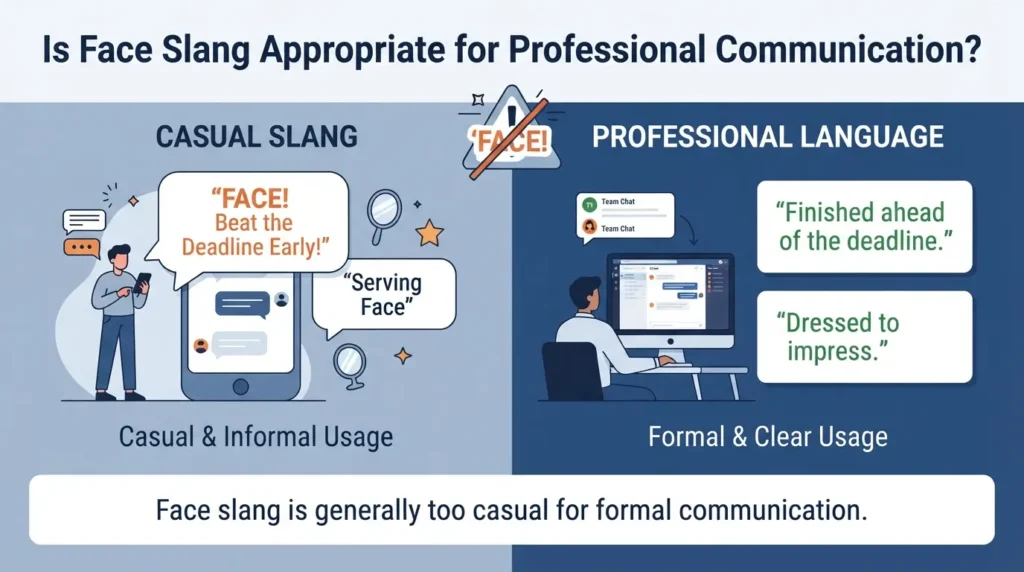
These slang meanings of face are not suitable for formal professional communication, since they’re inherently casual, playful expressions tied to social and gaming contexts.
Too casual: “FACE! Beat the deadline early.”
Better: “Finished ahead of the deadline.”
For professional settings, always choose clear, direct language instead of casual slang exclamations or compliments.
FAQs
1. What does “Face!” mean in texting?
It’s a triumphant exclamation, short for “in your face!”, said after winning or delivering a comeback.
2. What does “serving face” mean?
It means showing confidence through a bold, polished look, originating from drag and ballroom culture.
3. Is “Face!” rude to say?
Usually not, especially between friends. It’s typically playful rather than genuinely mean.
4. Where does “serving face” come from?
It originated in LGBTQ+ ballroom and drag culture, later popularized by shows like RuPaul’s Drag Race.
5. Does describing someone as having “a face” mean something negative?
No, it’s a compliment referring to attractive or striking features.
6. Can I use “Face!” in a work setting?
It’s best avoided in professional communication, since it’s very casual slang.
7. Is “serving face” used the same way everywhere?
It’s widely recognized in the USA, UK, and Australia, largely due to global reality TV and social media influence.
Conclusion
Face carries several playful slang meanings beyond its literal definition, from the triumphant exclamation “Face!” to the confident, stylish phrase “serving face.” Context and tone shape which meaning applies, whether it’s competitive banter, a fashion compliment, or a casual comment about food.
Understanding face in text meaning helps you follow casual conversations, social media captions, and pop culture references more naturally, whether you’re teasing a friend after a win or complimenting someone’s confident look.

Hello,I am Zarish, a passionate content writer with 2 years of experience in the meaning niche. I create clear, engaging, and easy-to-understand content about words, phrases, slang, abbreviations, and expressions, helping readers understand language with confidence.