Have you ever seen “YOLO” in a text, caption, or hashtag and wondered exactly what it meant, or why people use it so often? You’re not alone. This punchy little acronym has become one of the most recognizable pieces of internet slang in the past decade.
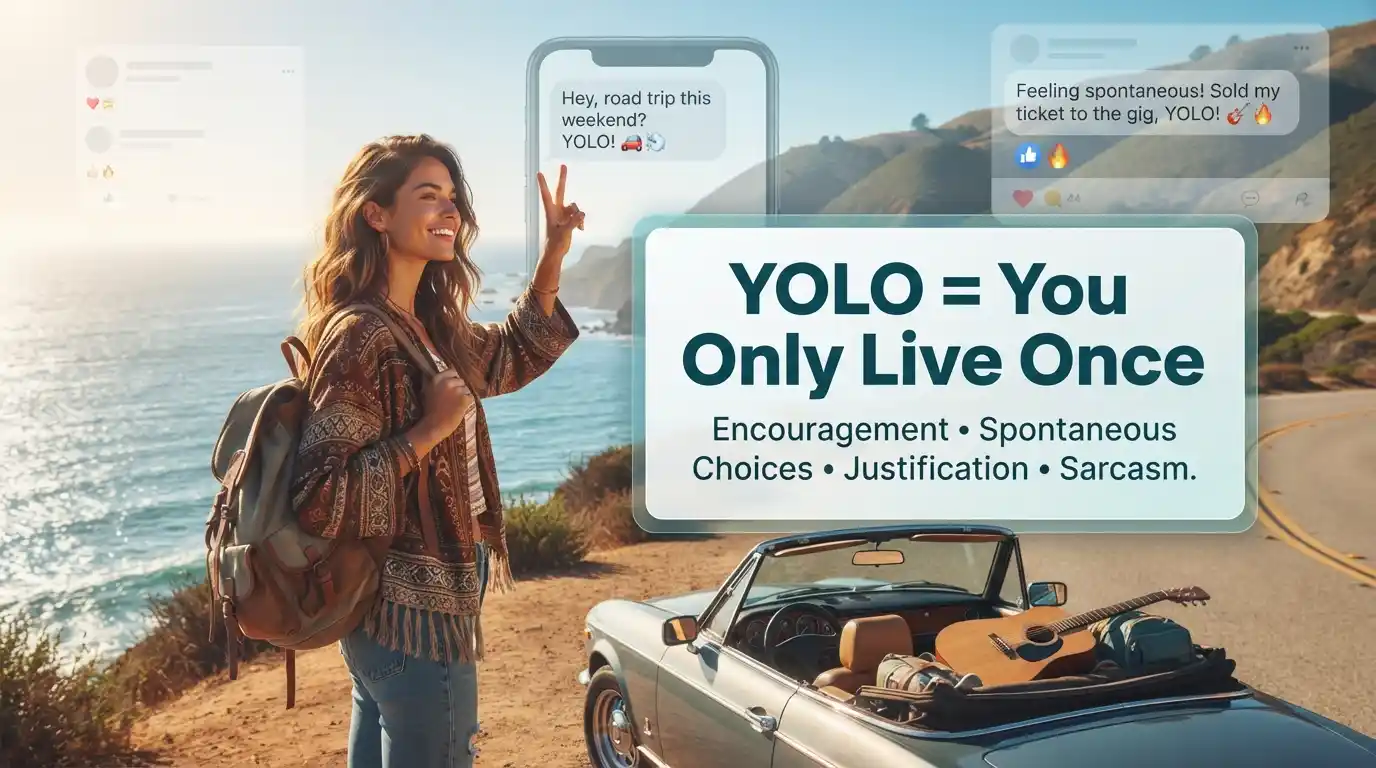
YOLO stands for “You Only Live Once.” It shows up everywhere, texting, social media captions, gaming chats, and casual conversations, usually encouraging someone to seize a moment or take a risk.
Understanding YOLO matters because it carries a specific attitude behind it: living boldly and not overthinking every decision. Knowing when it’s used sincerely, jokingly, or even sarcastically helps you read tone accurately and use it naturally in your own conversations. This guide covers everything about YOLO, from its meaning to how to respond when someone uses it.
YOLO in Text Meaning: Definition & Real-Life Examples

YOLO stands for “You Only Live Once.” It’s used to justify or encourage a bold, spontaneous, or slightly risky decision, essentially reminding someone that life is short, so it’s worth seizing the moment.
Example:
Maya: Should I really spend my whole paycheck on concert tickets?
Jake: YOLO, treat yourself!
It’s often used as a lighthearted justification right before or after doing something adventurous, spontaneous, or slightly reckless.
Example:
Zoe: I just booked a last-minute flight to Mexico.
Ben: YOLO! That’s amazing, have so much fun.
Sometimes people use YOLO sarcastically, poking fun at a decision that clearly wasn’t the smartest choice.
Example:
Sam: I ate an entire cake by myself last night.
Ali: YOLO, I guess
YOLO can function as:
- Encouragement pushing someone to take a fun risk
- Justification explaining a spontaneous choice
- Sarcasm jokingly acknowledging a questionable decision
Example (encouragement):
Friend: Should I ask them to dance?
You: YOLO, go for it!
The core feeling stays consistent: YOLO expresses that life is short, so it’s worth taking chances and enjoying the moment.
The History Behind YOLO in Text Meaning
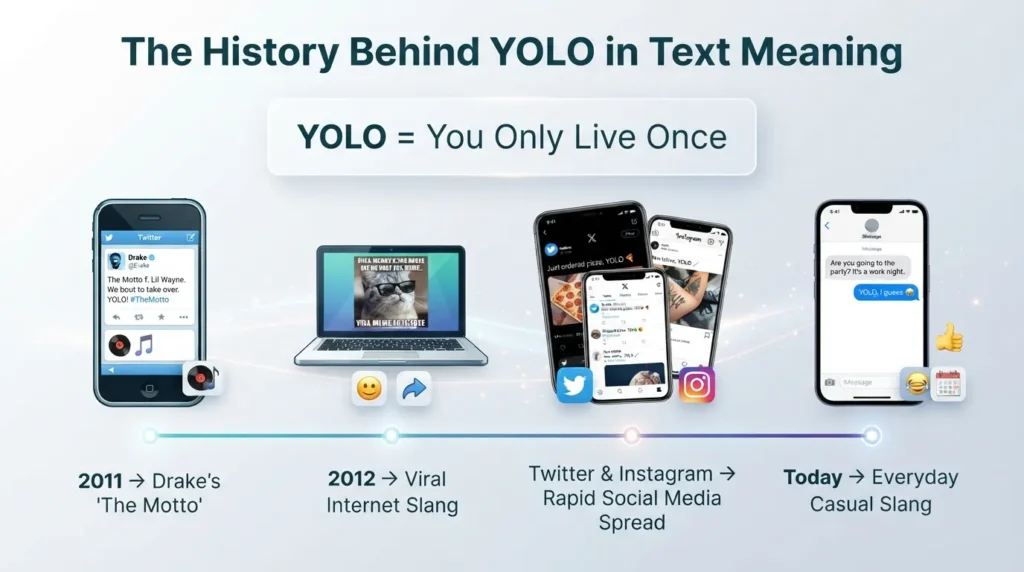
While the sentiment behind “you only live once” has existed in various forms for a long time, the acronym YOLO exploded in popularity thanks to a specific cultural moment. In 2011, rapper Drake used the phrase in his song “The Motto,” featuring Lil Wayne, with the memorable line “You only live once, that’s the motto.” The song’s massive popularity turned the phrase into a viral acronym almost overnight.
By 2012, YOLO had become one of the most widely used slang terms online, appearing constantly across Twitter, Instagram, and text messages. It was so widely used that Oxford Dictionaries even shortlisted it as a contender for Word of the Year in 2012.
As with many viral slang terms, YOLO eventually became a target for jokes and parody, especially as people used it to justify increasingly reckless or silly decisions. This gave the term a dual life: sometimes sincere encouragement, sometimes self-aware sarcasm about a bad choice.
Despite fading somewhat from peak viral status, YOLO never fully disappeared. It settled into everyday slang, especially useful for:
- Justifying spontaneous decisions
- Encouraging someone to take a fun risk
- Joking about questionable choices after the fact
Today, YOLO remains common across texting, social media captions, and casual conversations, especially among people who grew up with its initial rise in popularity, though newer generations recognize and use it too.
YOLO in Text Meaning Across Different Platforms

Texting (encouragement):
Dan: Thinking about signing up for that skydiving trip.
Ella: YOLO, absolutely do it!
Social Media (caption justification):
Caption: Quit my job to travel for six months. YOLO
Gaming (lighthearted risk-taking):
Player1: Going all in on this risky move.
Player2: YOLO, let’s see how it plays out.
Casual Conversations (sarcasm):
Noah: Bought concert tickets I definitely can’t afford.
Ryan: YOLO, I guess we’re eating instant noodles this month.
Encouraging Someone to Take a Chance:
Coworker1: Should I ask for that promotion?
Coworker2: YOLO, what’s the worst that could happen?
This shows how flexible YOLO is, fitting naturally into encouragement, justification, and self-aware humor across many casual settings.
Common Misconceptions & Clarifications
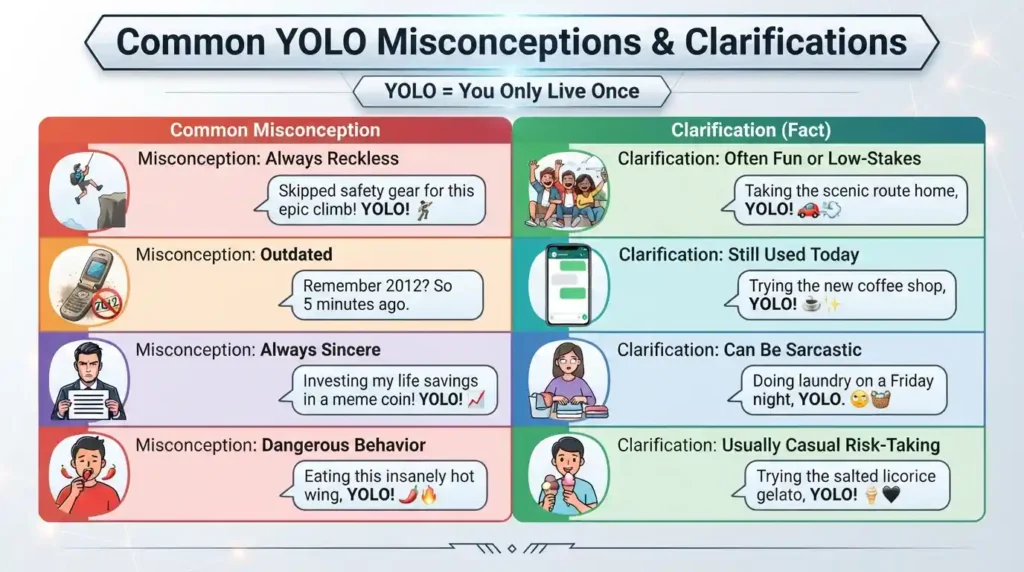
Misconception 1: YOLO always means reckless behavior.
Not true. While sometimes used to justify risky choices, it’s often just gentle encouragement to enjoy life or try something new.
Misconception 2: YOLO is outdated and no longer used.
While it peaked in popularity around 2012, it’s still commonly used today, both sincerely and jokingly.
Misconception 3: YOLO is always sincere.
It’s frequently used sarcastically, acknowledging a decision wasn’t particularly wise, but embracing it anyway with humor.
Misconception 4: YOLO encourages genuinely dangerous behavior.
In casual use, it almost always refers to fun, low-stakes risks, like trying new food, spontaneous trips, or bold fashion choices, not activities that could cause real harm.
Clarification: Context shapes whether YOLO is meant as genuine encouragement or playful self-awareness about an impulsive decision.
Similar Terms & Alternatives
| Term | Meaning | Common Use |
| YOLO | You only live once | Encouragement, justification, sarcasm |
| FOMO | Fear of missing out | Motivating spontaneous decisions |
| Carpe diem | Seize the day (Latin phrase) | Similar encouraging sentiment |
| Living my best life | Enjoying the moment fully | Social media captions |
| Treat yourself | Justifying a fun indulgence | Casual encouragement |
Example:
Alex: Splurged on a fancy dinner just because.
Jordan: YOLO, treat yourself, you deserve it.
These terms often appear together, all encouraging people to embrace spontaneous, joyful decisions.
How to Respond to This Term

Casual:
Friend: YOLO, I’m getting the tattoo I’ve been thinking about.
You: Go for it! Send pics after.
Funny:
Friend: YOLO, ate the whole tub of ice cream.
You: Absolute legend, zero regrets I hope
Professional:
YOLO rarely fits workplace communication, but in a relaxed team setting:
Coworker: YOLO, I’m finally using my vacation days.
You: Good for you, you’ve definitely earned it.
Privacy-Conscious:
If someone shares a big decision and you’re unsure how to react:
You: Love the energy! Hope it goes exactly how you’re hoping.
Matching tone keeps the conversation supportive and light, whether it’s genuine encouragement or shared humor about a spontaneous choice.
Regional or Cultural Differences
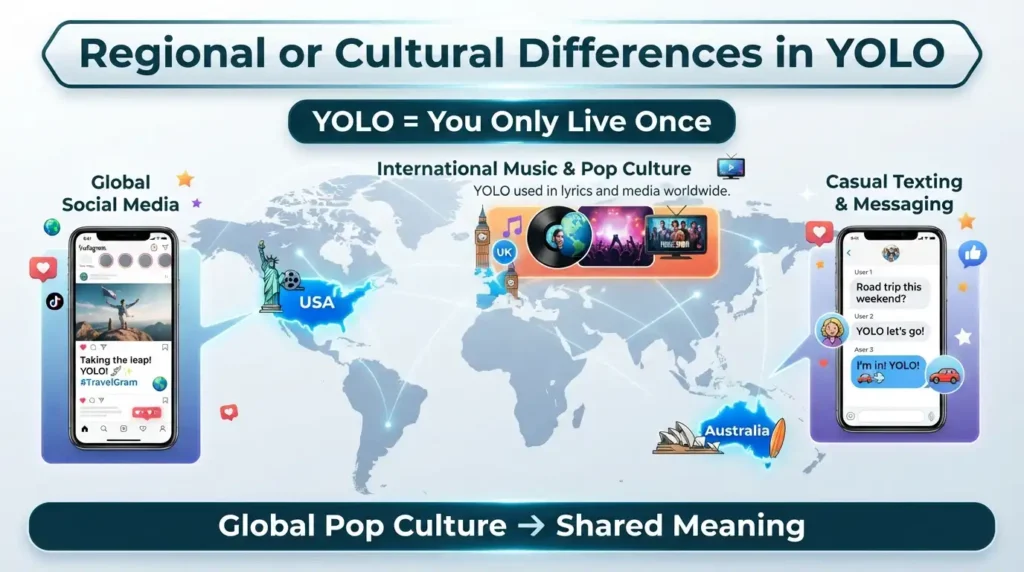
YOLO is widely recognized across major English-speaking regions, including the USA, UK, and Australia, largely due to its rapid spread through global music and social media platforms starting in 2011 and 2012.
Because Drake’s song reached international audiences almost instantly, YOLO became one of the faster-spreading viral acronyms, crossing regional boundaries with little variation in meaning.
In the UK, YOLO is used similarly to its American usage, often applied to spontaneous decisions or self-aware jokes about impulsive spending.
In Australia, casual texting culture also embraced YOLO quickly, fitting naturally alongside other laid-back, adventure-encouraging slang already common in Australian English.
Because it spread primarily through global pop culture rather than regional slang traditions, YOLO tends to carry a consistent meaning across English-speaking countries.
Comparison with Similar Terms
| Term | Formality | Platform | Risk of Confusion |
| YOLO | Very casual | Texting, social media | Low |
| FOMO | Casual | Social media, texting | Low |
| Carpe diem | Semi-formal | Written, spoken English | Low |
| Treat yourself | Casual | Texting, social media | Low |
The main difference is that YOLO carries a slightly more playful, meme-influenced tone compared to more traditional phrases like “carpe diem,” which feels more formal and literary.
Usage in Online Communities & Dating Apps
On Tinder or other dating apps, YOLO often appears when suggesting a spontaneous plan or bold move.
Match: Want to grab drinks tonight instead of just texting?
You: YOLO, let’s do it!
On Twitter, YOLO frequently appears in posts about spontaneous decisions or humorous self-aware confessions.
User: Booked a one-way flight with zero plan. YOLO.
In gaming communities, especially Discord, YOLO often describes a risky, all-or-nothing move during gameplay.
Teammate: Going for the risky play, no backup plan.
You: YOLO, let’s see it.
Tip for responding: On dating apps, using YOLO to suggest spontaneous plans adds a fun, adventurous tone without feeling overly serious.
Hidden or Offensive Meanings
YOLO does not carry any offensive or hidden meaning. It’s a lighthearted phrase encouraging people to embrace spontaneous, joyful moments in life.
That said, tone matters when using it around genuinely risky or harmful decisions. Using YOLO to justify something dangerous, rather than simply fun or spontaneous, can come across as dismissive of real consequences.
Example:
Friend: Thinking about skipping my doctor’s appointment because I’m nervous.
You: I get being nervous, but this one’s worth going to. I can go with you if that helps.
In situations involving real risk or important responsibilities, it’s worth gently steering away from a “YOLO” mindset rather than encouraging it.
Suitability for Professional Communication
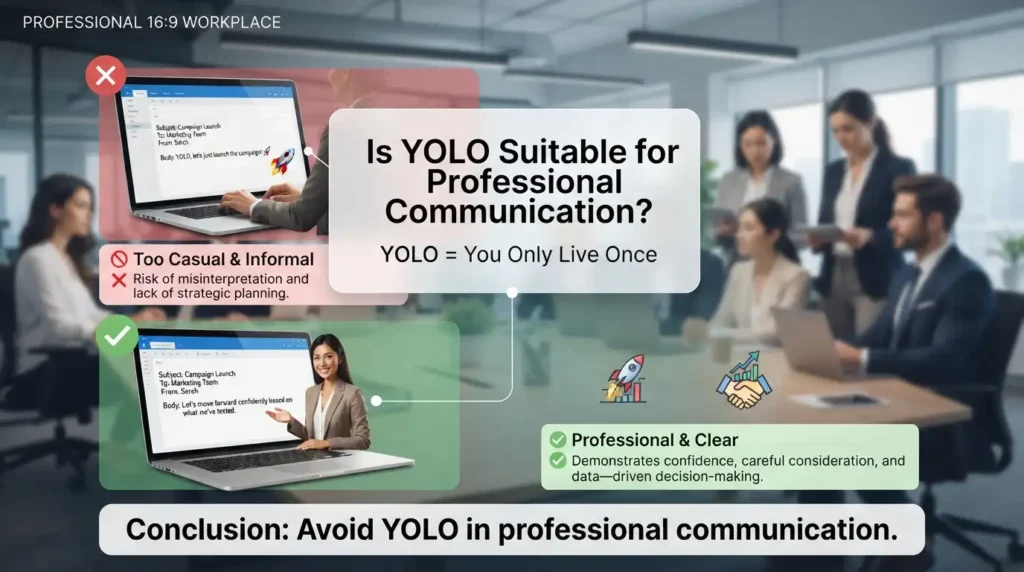
YOLO is generally too casual for formal professional communication, such as official emails or client-facing messages.
Too casual: “YOLO, let’s just launch the campaign without more testing.”
Better: “Let’s move forward confidently with the campaign based on what we’ve tested so far.”
For professional settings, replace YOLO with more measured language that still conveys confidence or decisiveness without sounding overly casual.
FAQs
1. What does YOLO mean in texting?
It stands for “You Only Live Once,” encouraging spontaneous or bold decisions.
2. Where did YOLO come from?
It became widely popular after Drake used the phrase in his 2011 song “The Motto.”
3. Is YOLO always used sincerely?
No, it’s often used sarcastically to joke about a questionable or impulsive decision.
4. Is YOLO still used today?
Yes, though it peaked in popularity around 2012, it remains common in casual texting and social media.
5. Can I use YOLO in a professional email?
It’s best avoided in formal communication, since it’s very casual slang.
6. Does YOLO encourage genuinely dangerous behavior?
Typically not. In casual use, it usually refers to fun, low-stakes decisions rather than serious risks.
7. Is YOLO used the same way internationally?
Yes, thanks to its viral spread through music and social media, it carries a consistent meaning across major English-speaking countries.
Conclusion
YOLO captures a simple but powerful sentiment: since “you only live once,” it’s worth embracing spontaneous moments and bold decisions. Whether used sincerely or sarcastically, it reflects a lighthearted attitude toward seizing opportunities.
Understanding YOLO in text meaning helps you read its tone accurately, whether you’re encouraging a friend to take a fun risk, justifying your own spontaneous decision, or joking self-awarely about something impulsive you already did.

Hello,I am Mahrunnisa, a passionate content writer with 2 years of experience in the meaning niche. I love creating simple, clear, and engaging content about words, phrases, expressions, and abbreviations, helping readers understand meanings easily and confidently.