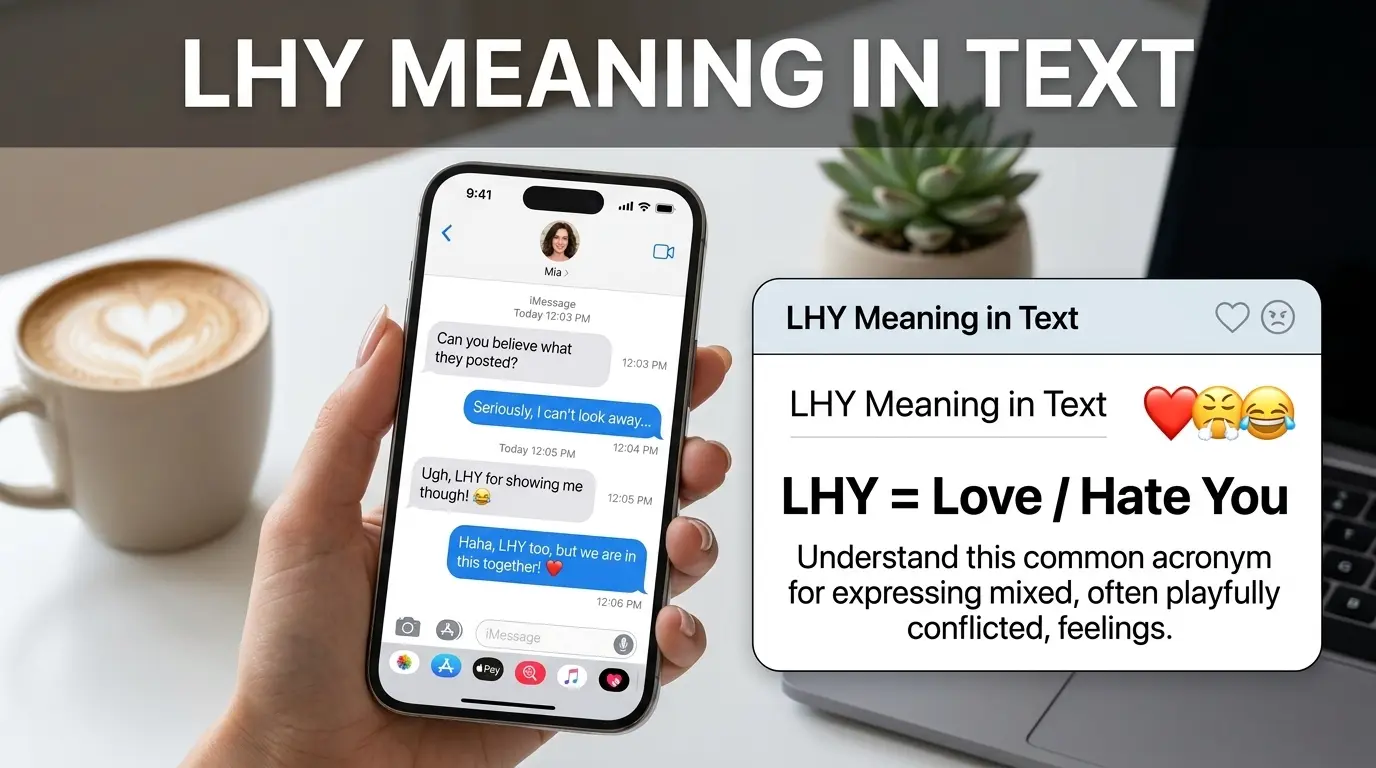
Your friend does something ridiculous, and you reply with “lhy .” Or maybe someone texts it to you out of nowhere, and you’re left wondering if that’s a compliment or an insult.
LHY is a short, playful abbreviation that shows up in texting, social media comments, and group chats. It’s the kind of term that sounds harsh at first glance but usually carries a much lighter, more affectionate tone once you know what it really means.
You’ll see LHY pop up when someone teases a friend, reacts to something funny, or expresses mixed feelings toward someone they actually care about. Because it looks like it could mean something negative, it’s easy to misread if you’re seeing it for the first time.
Understanding LHY matters so you don’t take it the wrong way, and so you can use it naturally yourself. This guide covers exactly what LHY means, where it came from, how people use it today, and how to respond when someone sends it to you.
Definition & Meaning
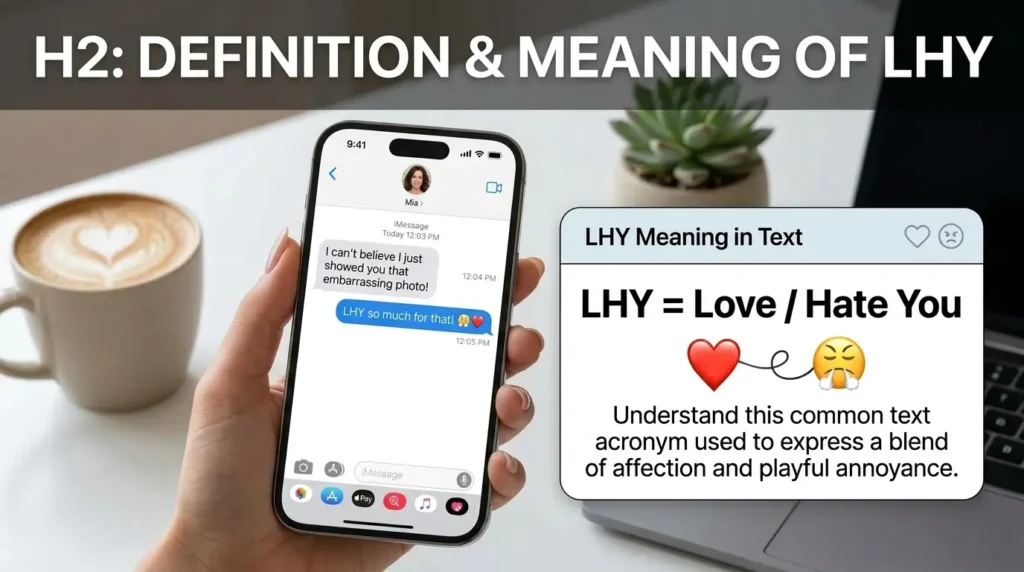
LHY most commonly stands for “Love/Hate You.” It’s a playful way of expressing mixed feelings toward someone, usually affection mixed with mock annoyance rather than genuine dislike.
People typically use LHY when someone does something endearing but slightly irritating, like being late, teasing them, or being “too good” at something in a way that’s fun to complain about.
Real-life examples:
- Friend 1: I finished the whole show in one night, told you it was good
- Friend 2: lhy, now I can’t stop thinking about it
- Person A: guess who beat your high score again
- Person B: lhy so much rn
- Comment: you always post the best food pics, lhy
In each case, the sender isn’t actually upset. They’re using LHY to express a lighthearted mix of admiration and playful frustration, almost like saying “I’m annoyed you’re this likable.”
It’s worth noting that a small number of older slang references list a harsher, less common definition of LHY as simply “I hate you,” typically used sarcastically or in a joking argument between friends. This version is far less common today than the affectionate “Love/Hate You” meaning, but it shows why reading the full context of a conversation matters before deciding how to take it.
Background & History
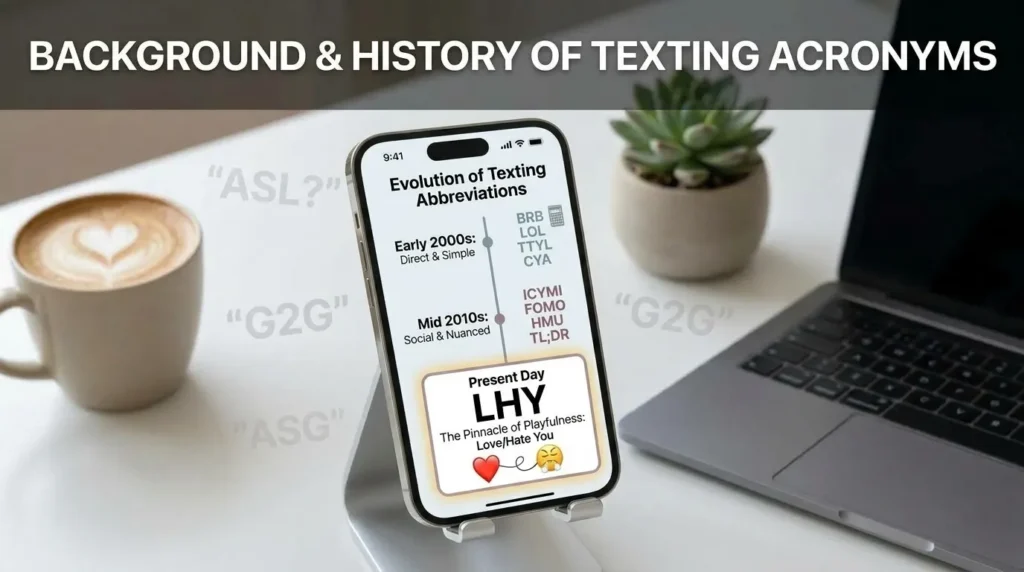
LHY developed the way a lot of texting slang does: through people shortening a common phrase to save time and add a bit of playful drama to everyday conversations. “Love/hate” as a phrase has long been used to describe mixed feelings, whether about a person, a show, or a situation, and texting culture eventually compressed it into a quick three-letter reaction.
Around the late 2000s and early 2010s, as texting became the primary way many people communicated day to day, short emotional reactions like LHY became common shorthand for expressing complicated feelings without writing a full sentence.
Social media culture helped the term spread further. Comment sections and group chats often reward quick, dramatic-sounding reactions, and “love/hate you” fit that style perfectly. It let people express genuine fondness while still sounding a little exaggerated or funny, which made it catch on in casual online spaces.
Today, LHY is most commonly used in:
- Group chats between close friends
- Social media comments, especially reacting to something impressive or relatable
- Casual texting between people who tease each other affectionately
- Gaming chats, often after a friend wins or does something frustratingly good
Its staying power comes from how well it captures a very specific, common feeling: liking someone so much that their talent, humor, or personality is almost annoying.
Usage in Various Contexts
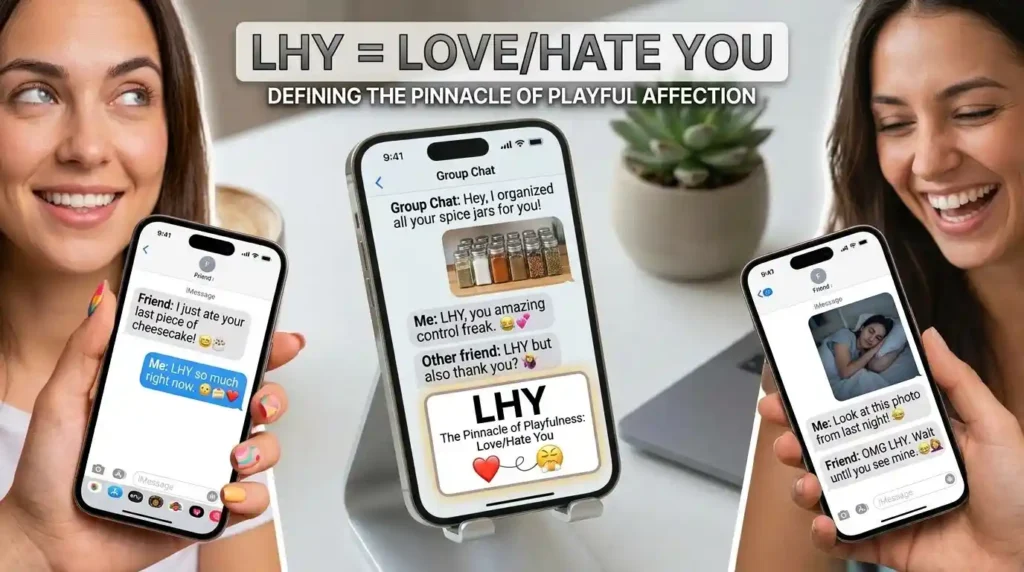
LHY shows up a little differently depending on the setting and relationship.
Between close friends, it’s often a teasing reaction to something impressive:
Zain: told you I’d win this round again Bilal: lhy, how are you this good
On social media, it frequently appears as a quick, affectionate comment:
Comment: your cooking videos are unreal, lhy
In gaming chats, it often follows a friendly rivalry moment:
Teammate: carried the whole match again You: lhy fr, stop being so good
In casual conversation, it can express playful annoyance about something relatable:
Friend A: just finished season 2 in one sitting Friend B: lhy, now I have to watch it too
Between siblings or close family, it sometimes shows up in a lighthearted, joking way:
Sibling: ate the last slice of pizza You: lhy so much right now
Across these situations, LHY almost always signals playful affection, not real hostility. The tone of the surrounding message, usually joking, impressed, or lightly exasperated, makes the intended meaning clear.
Common Misconceptions & Clarifications
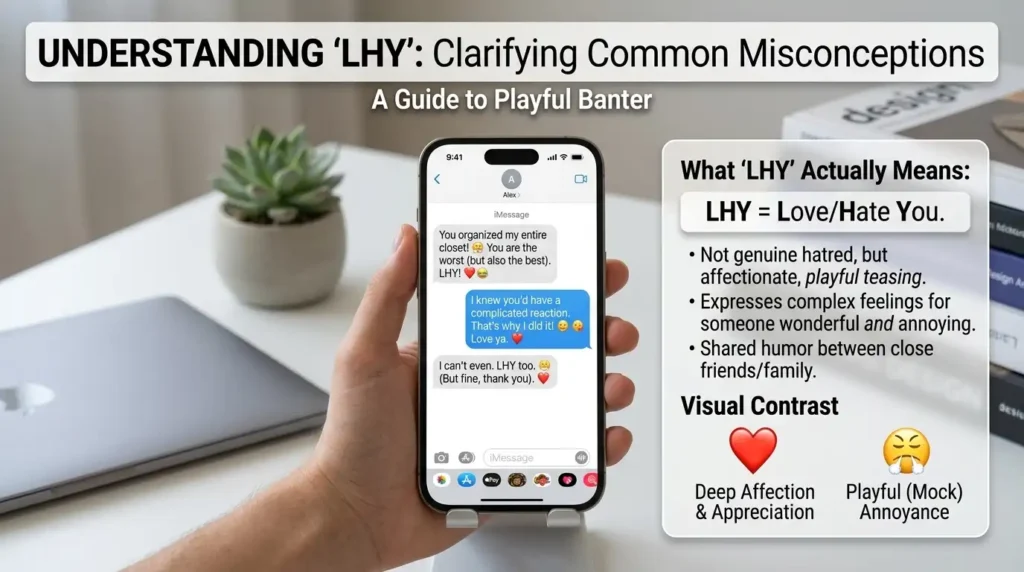
The biggest misconception about LHY is assuming it always means genuine dislike. In the vast majority of everyday texting, LHY expresses fondness mixed with playful frustration, not real anger or hatred.
Another common confusion comes from similar-looking abbreviations like IHY (I Hate You) or GHY, which can look alike at a glance but carry different tones. IHY, for example, is more often used bluntly or sarcastically without the same built-in affection that LHY typically implies.
Some older slang references do list a harsher definition of LHY as simply “I hate you,” usually meant sarcastically between friends during a joking argument. While this usage exists, it’s far less common today than the “Love/Hate You” meaning, and it usually still relies on a joking, non-serious tone rather than genuine hostility.
Can LHY be misread as rude? It can, especially if someone isn’t familiar with the term or receives it out of context. Because the words “hate” and “love” are both present, tone matters a lot. Among friends who already text casually, LHY almost always reads as playful. From someone you don’t know well, or without any clear joking context, it’s reasonable to double-check what they meant.
Similar Terms & Alternatives
Several other abbreviations express similar playful or mixed emotions. Here’s how they compare:
| Term | Meaning | Best Used For |
| LHY | Love/Hate You | Playful affection mixed with mock annoyance |
| IHY | I Hate You | Blunt or sarcastic frustration |
| GHY | God Hate You (playful exaggeration) | Similar teasing reaction, more dramatic |
| YGY | You Got Yourself (also, “You’re So Good”) | Impressed or teasing reaction |
| SMH | Shaking My Head | Disbelief or mild disapproval |
| LOL | Laugh Out Loud | General amusement |
IHY is more direct and can feel harsher without the built-in “love” softening it, while GHY leans into exaggerated, dramatic teasing in a similar spirit to LHY. YGY often appears in the same kind of “you’re too good at this” context but skips the mixed-feelings angle entirely.
If you want a term that’s less likely to be misread, spelling out “you’re annoyingly good at this” or simply using a laughing emoji alongside your message keeps the tone clear without relying on an abbreviation that could be misunderstood.
How to Respond to This Term
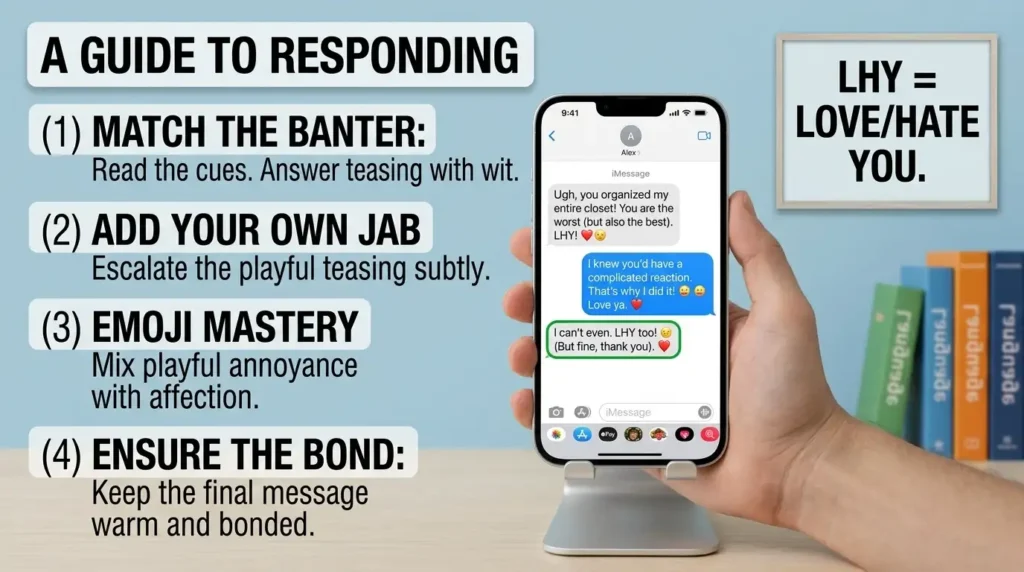
How you respond to LHY depends on the relationship and the context it was used in.
Casual response:
Them: lhy, stop being so funny You: haha can’t help it
Funny response:
Them: lhy so much right now You: love you too, mostly
Professional or neutral response (LHY rarely belongs in professional settings, but if it slips into a casual work chat with a friendly coworker):
Them: lhy for finishing that report before me lol You: haha all in good fun, nice work too!
Privacy-conscious or clarifying response (if the tone feels unclear, especially from someone you don’t know well):
Them: lhy You: haha wait, good or bad lhy?
The safest general approach: treat LHY as playful unless the conversation clearly says otherwise. If you’re ever unsure, asking lightly clears things up without making the moment awkward.
Regional or Cultural Differences
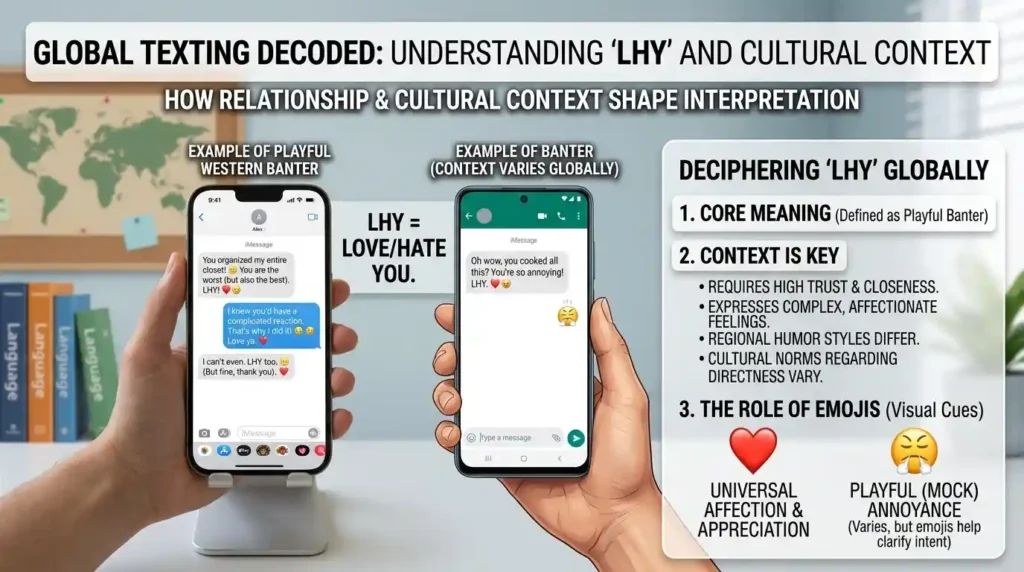
LHY is primarily an English-language texting abbreviation, and its use is most common among younger, English-speaking social media users, particularly in casual group chats, comment sections, and gaming communities.
Its recognition varies depending on region and online community. In areas with strong meme and comment-culture influence, especially on platforms like TikTok and Instagram, LHY appears fairly often. In more traditional or less slang-heavy English-speaking communities, it may be less recognized, with people preferring more universally understood phrases like “you’re the best” or “I can’t with you.”
Outside of English, LHY doesn’t translate directly, since it’s built from an English phrase. Other languages and cultures often have their own local way of expressing playful, mixed affection, so LHY largely stays within English-language internet slang rather than spreading as a direct translation.
If you’re chatting with someone from a different language background or unfamiliar with English texting slang, it’s worth explaining the term the first time you use it to avoid any confusion.
Comparison with Similar Terms
Here’s how LHY stacks up against other commonly confused reaction abbreviations:
| Term | Full Meaning | Formality | Common Setting |
| LHY | Love/Hate You | Very informal | Friend groups, comments, gaming |
| IHY | I Hate You | Very informal, blunt | Sarcastic arguments, teasing |
| GHY | Exaggerated “hate” (playful) | Very informal | Dramatic, joking reactions |
| SMH | Shaking My Head | Informal | Disbelief, mild disapproval |
| LOL | Laugh Out Loud | Very informal | General amusement |
Key difference: LHY specifically blends affection and mock frustration together, while IHY leans purely toward the frustration side without the same warmth. SMH and LOL don’t carry the same personal, relationship-focused tone that LHY does, since they’re more general reactions rather than something aimed affectionately at a specific person.
Usage in Online Communities & Dating Apps

On Twitter/X, LHY often shows up in reply threads reacting to something impressive, funny, or relatable:
Reply: you always know exactly what to say, lhy
On dating apps like Tinder, LHY can appear once a conversation has some playful chemistry going, especially after a witty or charming response:
Match: guess I’m just naturally funny You: lhy, way too confident but I’m here for it
In gaming communities, LHY frequently follows a friendly rivalry moment, especially after losing to a friend repeatedly:
Teammate: carried again, no cap You: lhy, this is getting embarrassing
Tips for responding appropriately across these platforms:
- On social media, treat LHY as a compliment wrapped in playful exaggeration.
- On dating apps, it works best once some back-and-forth banter is already established, rather than very early in a conversation.
- In gaming chats, it’s a normal, friendly way to react to a skilled teammate or opponent without sounding overly serious.
Hidden or Offensive Meanings
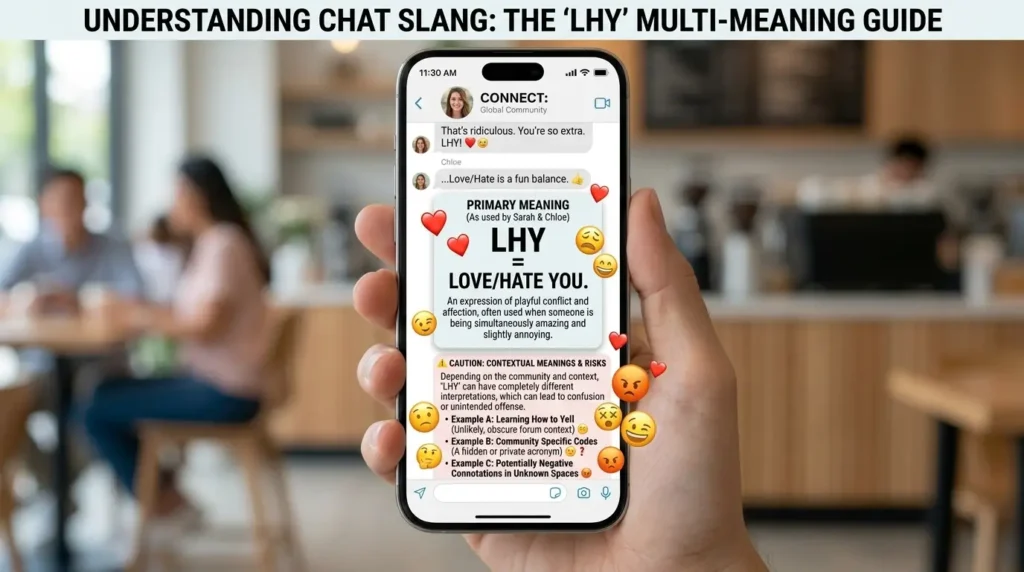
In everyday use, LHY does not carry a genuinely offensive meaning. Its dominant definition, “Love/Hate You,” is playful and affectionate, even though the word “hate” appears in it.
As mentioned earlier, a less common, older definition treats LHY more literally as “I hate you,” typically used sarcastically during joking arguments between friends. This version is far less widespread today, but it explains why the term can occasionally feel sharper depending on who’s using it and how.
Why tone and context matter so much: Because LHY contains both “love” and “hate,” it sits in a slightly unusual spot compared to purely positive or purely negative slang. The surrounding conversation almost always clarifies the intent, whether it’s a teasing reaction to something impressive or, less often, a sarcastic jab during a lighthearted disagreement. If a message ever feels genuinely hostile rather than playful, it’s reasonable to address that directly rather than assume it’s meant affectionately.
Suitability for Professional Communication

LHY is not suitable for professional or formal communication. It’s casual, emotionally mixed slang built for friendly teasing, which doesn’t translate well into workplace messaging, client communication, or formal writing.
Using LHY in a professional email or document risks sounding unclear or unprofessional, since colleagues unfamiliar with the term might misread it as genuinely negative, given that it literally contains the word “hate.”
Professional alternatives:
- Instead of “lhy for finishing that early” → “Nice work getting that done ahead of schedule!”
- Instead of “lhy, you’re making us all look bad” → “You’re really raising the bar on this project.”
In short, keep LHY reserved for casual, personal texting among friends, and rely on clear, straightforward compliments in any professional setting.
FAQs
1. What does LHY mean in text? It most commonly stands for “Love/Hate You,” expressing playful affection mixed with mock frustration.
2. Does LHY always mean something negative? No. In most everyday texting, it’s a lighthearted, affectionate reaction, not genuine dislike.
3. Is LHY the same as IHY? Not quite. IHY (“I Hate You”) tends to be blunter and less affectionate than LHY.
4. Can LHY be offensive? Rarely, in casual friendly contexts. A less common older meaning treats it more literally, so tone and relationship matter.
5. Is LHY appropriate for work messages? No, it’s too casual and could easily be misread in a professional setting.
6. How should I respond if someone sends me LHY? A playful, warm reply usually works best, since it’s typically meant affectionately.
7. Is LHY used the same way everywhere? Not exactly. It’s mostly common in English-language texting and social media slang, particularly among younger users.
Conclusion
LHY is a playful abbreviation for “Love/Hate You,” used to express affection mixed with lighthearted frustration, often toward someone who’s a little too likable, funny, or talented for their own good. While an older, harsher meaning exists, it’s far less common today.
The key takeaway: LHY usually means fondness, not hostility, tone and relationship context shape how it should be read, and responding with the same playful energy keeps the exchange light and fun. Understood this way, LHY becomes just another fun, low-stakes piece of everyday texting slang.

Hello,I am Zarish, a passionate content writer with 2 years of experience in the meaning niche. I create clear, engaging, and easy-to-understand content about words, phrases, slang, abbreviations, and expressions, helping readers understand language with confidence.